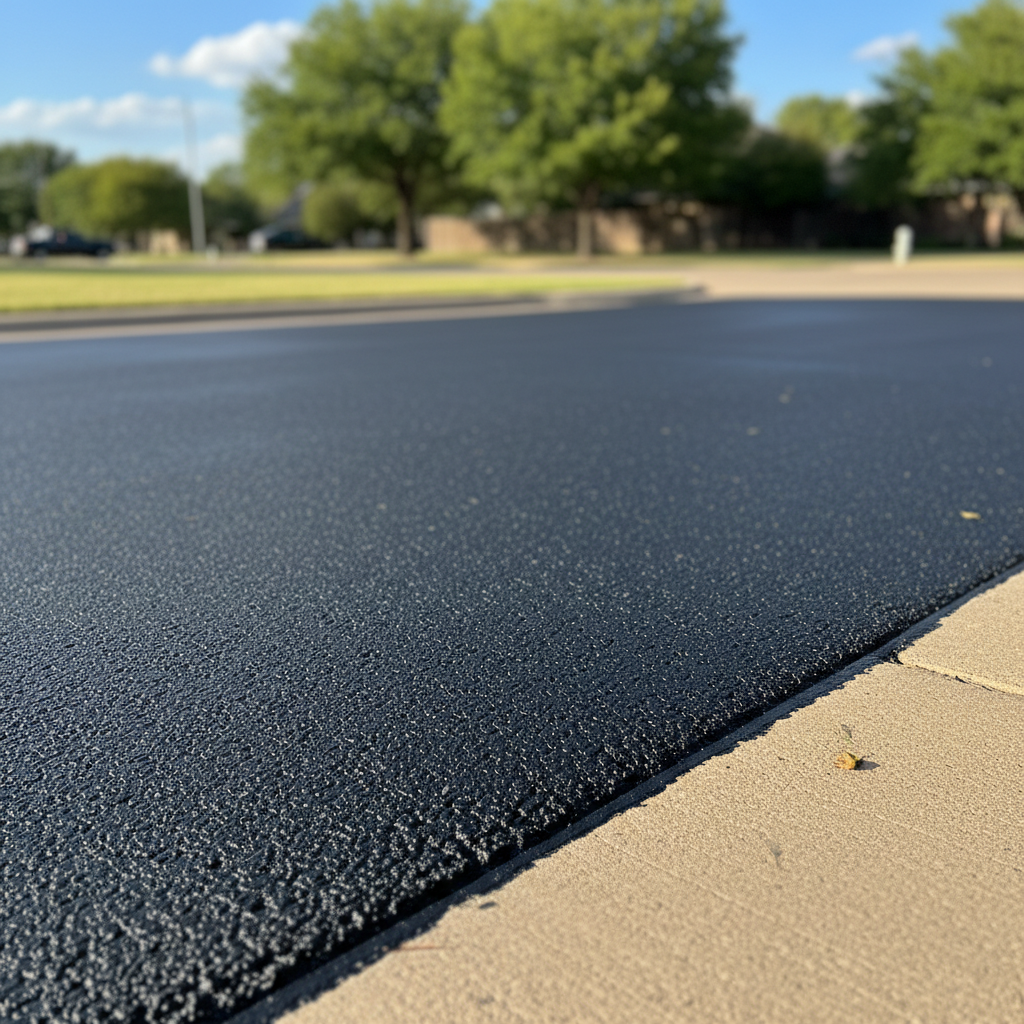
Alright, let's talk sealcoating. I get a lot of questions about it, and frankly, there's a lot of bad info out there. As a local guy running Top Gun Asphalt of Mesquite, I've seen firsthand what works and what doesn't on driveways right here in our town. So, I figured I'd tackle the most common questions you homeowners have, no fluff, just straight talk.
What exactly is sealcoating and why do I need it?
Think of sealcoating as sunscreen and a protective shield for your asphalt. It's a liquid layer, usually coal tar or asphalt emulsion based, that we apply to your existing asphalt pavement. It doesn't add structural strength, but what it does is protect the asphalt binder from the sun's UV rays, which dry it out and make it brittle. It also seals up those tiny cracks and pores, keeping water from seeping in and doing damage, especially during our hot Mesquite summers and those occasional freezes we get.
How often should I sealcoat my driveway?
This is probably the most asked question, and the answer isn't a simple 'every X years.' Generally, for a residential driveway, I recommend every two to three years. But it really depends on a few things: how much sun exposure your driveway gets, how much traffic it sees (do you have a dozen cars parked there every day, or just one?), and the quality of the original asphalt. If your driveway is looking dull, faded, or you're seeing a lot of small cracks, it's probably time. Don't wait until it's falling apart; sealcoating is preventative maintenance, not a miracle cure for a crumbling driveway.
What's the best time of year to get sealcoating done in Mesquite?
Timing is everything with sealcoating, especially with our Texas weather. You need warm, dry conditions for the sealer to cure properly. That means no rain in the forecast for at least 24-48 hours after application, and the ground temperature needs to be consistently above 50°F. So, late spring, early summer, and early fall are usually ideal here. Trying to do it in the dead of winter or during a super rainy spell is just asking for trouble. The sealer won't bond right, and you'll be wasting your money.
Can I just buy some sealer and do it myself?
You can, sure. There are products at the big box stores. But honestly, I don't recommend it if you want a professional, long-lasting job. There's a lot more to it than just pouring it on and spreading it with a squeegee. Proper surface preparation is key – cleaning, degreasing oil spots, filling cracks beforehand. Plus, commercial-grade sealers are different from what you'll find at Home Depot. They're thicker, more durable, and require specific application techniques to get an even, consistent coat that actually lasts. I've seen plenty of DIY jobs that look patchy, wear unevenly, and end up costing more in the long run because they have to be redone sooner.
How long does it take to dry and when can I drive on it?
After we apply the sealcoat, it needs time to cure. Generally, you can walk on it after about 4-8 hours, but you absolutely should stay off it with vehicles for at least 24-48 hours. If it's a cooler day or if it's a particularly thick application, we might recommend waiting even longer, up to 72 hours. Driving on it too soon will leave tire marks, scuff the surface, and compromise the sealer's ability to cure properly. I always tell folks to plan ahead and park on the street or in a neighbor's driveway for a couple of days. Patience pays off here.
What about cracks? Does sealcoating fix them?
This is a common misconception. Sealcoating is great for filling tiny hairline cracks and preventing new ones, but it's not a crack repair solution for anything significant. If you have cracks wider than about a quarter-inch, they need to be cleaned out and filled with a hot-pour crack filler *before* we sealcoat. If you just sealcoat over bigger cracks, they'll show right through, and water will still get in, undermining your asphalt. Think of it like painting over a hole in your wall – it doesn't fix the hole, it just hides it poorly for a little while. We take care of crack filling as part of our prep work, because it's crucial for a good, lasting sealcoat job.
Will sealcoating change the color of my driveway?
Yes, it will. Sealcoating restores your asphalt to a rich, dark black color. When asphalt ages, the sun and elements oxidize the surface, making it turn gray and faded. Sealcoating brings back that fresh, deep black look, which also helps it absorb more heat from the sun, making it more flexible. It's not just about protection; it really spruces up the curb appeal of your home, especially in neighborhoods like Town East or Galloway where folks really care about their property's appearance.
Look, sealcoating is a smart investment to protect your driveway and keep it looking good for years. If you've got more questions or want to get a quote, give Top Gun Asphalt of Mesquite a call. We're here to help you keep your asphalt in top shape.